
When Do I Need New Hearing Aids? 5 Questions to Ask First
If you're asking yourself whether it's time for new hearing aids, you're not alone. It's one of the questions I hear most often from patients across Portland, Gresham, and the rest of Multnomah and Clackamas Counties. I understand why it's confusing. There's a lot of mixed information out there — from hearing aid brands, from social media, even from hearing health providers. It's a fair question, and an important one. For many people, hearing aids are their gateway to connecting with the world and the people they love. At the same time, it's the second most expensive purchase most people will make, second only to their car.
So with all that at stake, let's walk through five questions that will help you answer the big one.
Quick Answer
You likely need new hearing aids if your current devices no longer meet your real-life needs, a genuinely useful new feature has come out since you bought them, and simpler fixes (reprogramming, new earpieces, repair) won't solve the problem. Work through the five questions below to find out which of these applies to you — and what it's worth to you — before you decide.
1. What Is Your Hearing Aid For?
There's a lot of marketing out there about what the latest and greatest hearing aids can do. When I'm answering this question, though, I think it's important to dig into what you need your hearing aid to do. Here's an example: I'm genuinely impressed with the newest generation of hearing aids' ability to reduce wind noise — but I spend so little time in windy environments that this feature doesn't actually matter to my lifestyle.
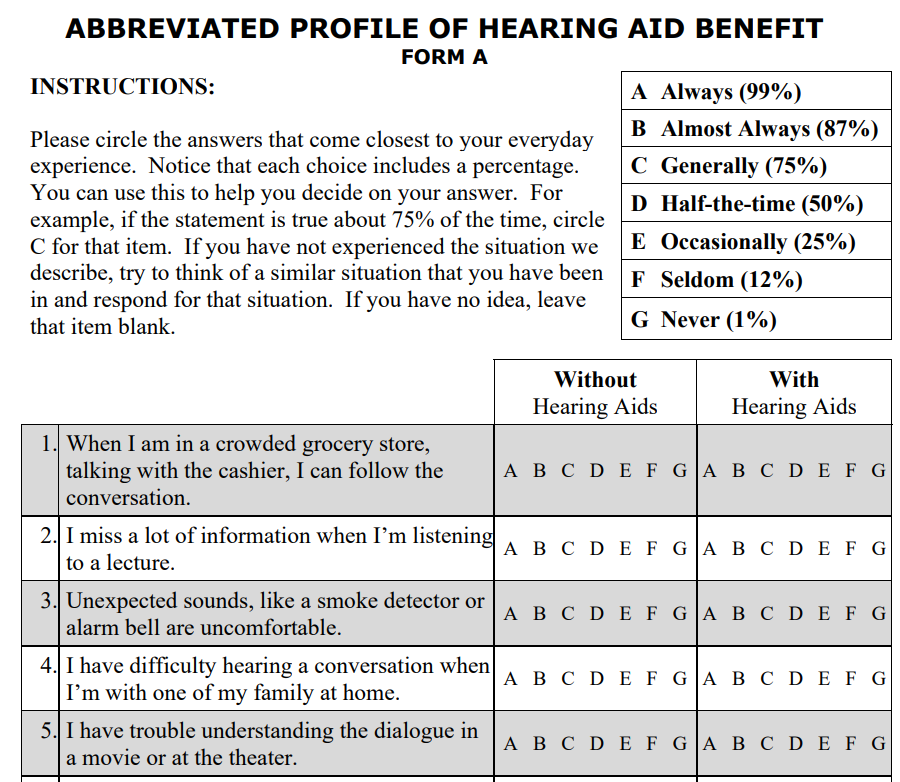
If you're asking yourself whether it's time for new hearing aids, start by mapping out the people, places, and situations that matter most in your life. Are your current hearing aids performing well in those areas? Two tools I recommend for this:
Abbreviated Profile of Hearing Aid Benefit: Use the APHAB questionnaire (PDF), a questionnaire that walks you through different everyday situations and has you rate how well or poorly your hearing aids perform in each one. Fill it out and see where you're having real trouble.
Client-Oriented Scale of Improvement: Use the COSI questionnaire (PDF), an open-ended form where you list your biggest hearing priorities and rate how well your hearing aids meet them. I use this with patients to dig into specific priorities the other tools don't capture, and I recommend you do the same.
Between the two, you'll get a clear snapshot of how well your current hearing aids are meeting your needs, and where you need more support.
2. What New Features Are Available?
I like to compare hearing aids to iPhones. Like Apple, hearing aid brands push out a new generation of devices about every 18 months, whether there's a real reason to or not. Some generations bring big changes:
Rechargeable batteries - huge for patients with dexterity issues who struggled to change batteries.
Phone streaming - reconnected patients who struggled on the phone with the people they love.
Auracast wireless connectivity - improved hearing in public spaces like theaters and churches.
Other generations bring more modest changes. A 15% boost in hearing-in-noise performance may not be noticeable to most people. Wind control doesn't matter if you're never in windy conditions. Even the features above may not matter to you if you don't mind changing batteries, don't use a cell phone, or don't have trouble hearing at church.
So your next question is simple: what's come out since you got your hearing aids, and do you actually need those features? Just like you may not care about a better camera on your iPhone, you may not care about the newest feature your hearing aid brand is pushing.
3. Are New Hearing Aids the Right Fix?
Say you've filled out the APHAB and COSI, found some real issues with your current hearing aids, and decided it's time to do something about it. So now it's time for new hearing aids, right? Not so fast. There are a number of issues where new hearing aids aren't just not the best solution, they may not fix the issue at all.
When a patient brings me a new issue with their hearing aids, I work through a checklist first:
Has your hearing changed?
Are your hearing aids programmed accurately?
Do you have the best earpieces for your ears?
Do you have the right accessories?
A “yes” to any of those means we should try something else before talking about replacement. Some issues I generally don't look to new hearing aids to solve:
Hearing at a distance
Hearing in very loud settings
Comfort or loudness of your own voice
Clarity in quiet settings
Overall loudness
If any of these are the reason you're considering new hearing aids, start by asking your hearing health provider what other options they can offer first.
4. How Much Is Better Performance Worth to You?
As an audiologist, I can walk you through your audiogram, your hearing aid options, and every special feature on the market. What I can't do is tell you what those things are worth to you. Hearing aids are expensive, and everyone brings a different relationship with money to a hearing aid consultation. I can discuss cost, but value is yours to decide.
Here's an example: let's say a new set of hearing aids gives you 20% better performance in background noise, and costs $3,000. The question is what that 20% is worth to you. If it's worth $3,000, it may be time for new devices - assuming you've worked through the first three questions above. If not, it may make sense to wait until the next generation pushes that number to 30% or 40%, or until you're in noisy settings often enough that the 20% boost is worth the money.
There's another cost equation worth thinking through: what does the alternative to new hearing aids cost? At Sono Audiology:
A hearing aid adjustment runs $100–$150.
New earpieces start at $170 for a set.
Factory repairs run $200 to over $500 per device, depending on age.
New devices run roughly $2,000–$5,000 per set.
Weigh those costs against each other. Your current hearing aid insurance benefit, if you have one, may also shift the equation. Sono Audiology doesn't contract with private insurers and offers competitive self-pay pricing, but for some patients, finding a clinic that bills their insurance directly is an important part of the decision.
If you’re leaning toward not getting new hearing aids right now, you can use these numbers to help you plan for when the time does come. I recommend patients think about when they may want to replace their hearing aids and start saving. It’s never too early to start planning for the big expense. Put a little money in a savings account each month so when you’re ready, you’ll be ready.
5. Do You Want New Hearing Aids?
We've covered a lot of the facts around whether to get new hearing aids, but at the end of the day, the decision is yours. My job is to give you the facts and the alternatives, and I may even gently push you away from new devices (I'm a good audiologist, but a terrible salesperson). The final call is still yours.
For some patients, peace of mind comes from knowing they have the best technology available. For others, it comes from knowing their devices are under warranty. If I've done my job and made you an empowered hearing aid user, there's no right or wrong choice here - only the right choice for you.
Where Do You Go From Here?
So there you have it: Five questions for anyone considering new hearing aids. I hope this has shed some light on the decision-making process I work through with my own patients. If you've made it this far and still think new hearing aids might be right for you, reach out to your hearing health provider to schedule a consultation. Ask questions, and listen to what they have to say. Many clinics also offer trials with new hearing aids for a small fee, so you can try the newest technology and compare.
If you're looking for an audiologist in Gresham, Portland, or anywhere in Multnomah County or Clackamas County, Oregon, take a look at Sono Audiology. Hearing aid consultations start at $100 and can be done by telehealth if you've had a hearing test recently, or in the comfort of your own home if you need a new test or prefer to meet face-to-face. Full pricing is listed on our website.
Frequently Asked Questions
How do I know if I need new hearing aids?
Work through the five questions above: what you actually need your hearing aids to do, whether a genuinely useful new feature has come out since you bought them, whether a simpler fix could solve the problem instead, what better performance is worth to you, and whether you want new devices. If your current hearing aids fall short on real priorities and a repair or adjustment won't close the gap, it's probably time.
How often should hearing aids be replaced?
There's no fixed timeline. Most people reassess every few years, but the real trigger isn't age. It's whether your current devices still meet your needs. A well-maintained set that's still doing its job doesn't need to be replaced on a schedule.
Are newer hearing aids always better?
Not necessarily. New generations come out roughly every 18 months, but not every new feature matters to every person. A feature that's life-changing for one patient may be irrelevant to another - it depends entirely on your lifestyle and listening environments.
How much does a hearing aid consultation cost at Sono Audiology?
Consultations start at $100. They can be done by telehealth if you've had a recent hearing test, or in-home if you need a new test or prefer face-to-face care. Sono Audiology serves patients throughout Multnomah and Clackamas Counties, Oregon. Full pricing is listed at sonoaudiology.com.
